
From Not Yet to Opportunity
By Rich Greene, ADTSEA-FL Board Member · View Board Bio
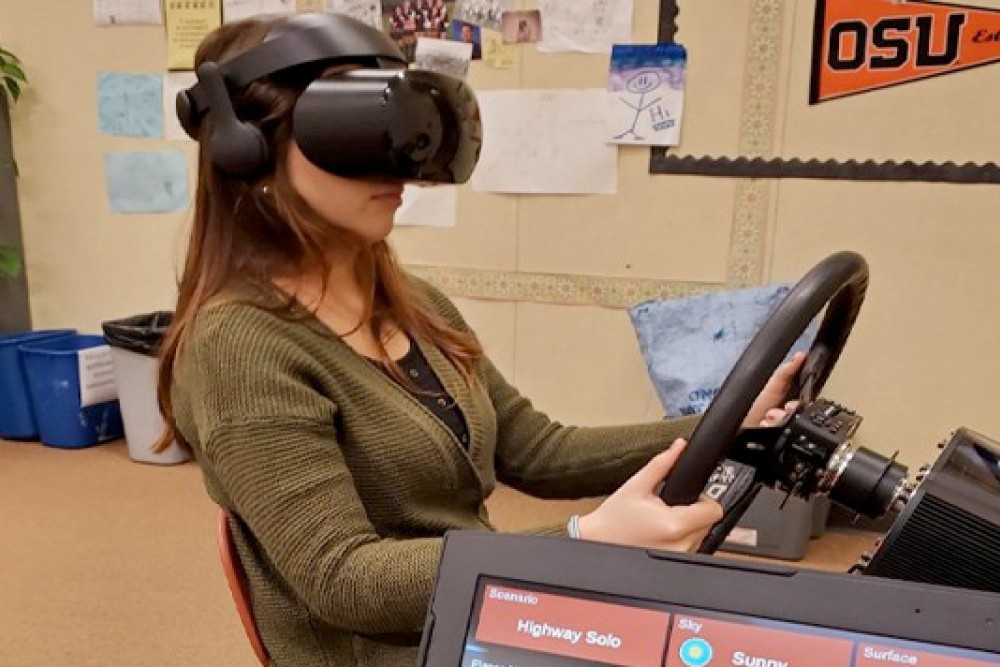
Not every student can safely start behind the wheel of a real car on day one. Virtual reality is giving Driver Education a safer middle step, one where mistakes become information instead of risk, and where more neurodiverse learners get a real opportunity to find out what's possible.
The Safety Catch-22
In a traditional driving school, the vehicle is the bottleneck, and the goal of every lesson is simple: everyone comes back safely. That safety mindset is why professional instructors are trained to scan and identify risk earlier and farther ahead than their students. It works. But it also means some students, including those who are autistic, have ADHD, or experience significant anxiety, may not be able to safely start their training in a real car right away.
That is not a failure of care. It's a reflection of a hard truth: a real vehicle on a real road is not a forgiving place to find out whether someone is ready to learn.
A Safer Way to Evaluate Potential
Driving simulation technology now allows students to begin in a virtual environment where they are the only vehicle on the road. No traffic, no pedestrians, no danger to the student, the instructor, or the public. Early mistakes, a missed stop sign, a late brake, an overwhelmed moment in traffic, become information instead of evidence that a student isn't ready.
The question changes from "Is this student ready to drive today?" to "Can this student learn the skills needed for driving in a safe, structured environment?"
That shift supports a proficiency-based model: a student advances only when ready, with complexity added gradually, at a pace built around the individual rather than a fixed timeline. Virtual reality doesn't replace real-world instruction or guarantee every student becomes a licensed driver. What it offers is a safer place to build confidence, observe skills, and determine whether a transition to in-car training makes sense.
The bigger picture: Driving is often the clearest path to independence, and for many families who've been told "not yet," that door has felt closed. Virtual reality doesn't eliminate risk or lower the standard for licensure. It gives more neurodiverse learners a fair, safe opportunity to take the first step.
Read the Full Article
Rich Greene's full essay, "From 'Not Yet' to Opportunity," explores this shift in depth, including how proficiency-based virtual training works, what it means for Certified Driver Rehabilitation Specialists, and why mistakes made safely can change the trajectory of a student's path to independence.
Past Articles
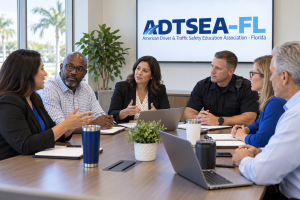
Driving Conversation - August 2026
On September 2, Driver Education coordinators, law enforcement liaisons, and traffic safety...Read More
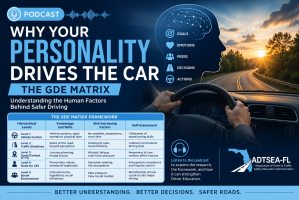
Why Your Personality Drives the Car - The GDE Matrix
After attending several workshops at the July 2026 ADTSEA National Conference in Cary, NC, I...Read More
Support Driver Ed in Florida, Become a Sponsor
ADTSEA-FL is growing, and sponsorship is how we move from good intentions to real statewide...Read More
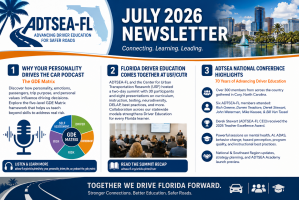
July 2026 Newsletter
July has been an important month for ADTSEA-FL, with new professional resources, a successful...Read More